


Earlier this month, the 190-member Republican Study Committee released a framework for a second reconciliation package that calls for “federal agencies to sell off or lease at a low rate underused and/or underutilized federal properties to expand access to affordable private-sector housing that enables homeownership.”
If that sounds alarmingly familiar it is because Utah Republican Sen. Mike Lee repeatedly used words like “underused” to describe public lands during his failed effort last year to force a sell-off of millions of federal acres under the guise of combatting America’s housing crunch.
In an effort to better understand the RSC proposal, Public Domain exchanged several emails with caucus spokesperson Calli Cooper.
Cooper said that the GOP caucus is not targeting federal public lands, but rather looking to offload “government buildings not in regular use, or not being actively used at all.”
“Our proposal is not related to public lands,” she said. “It is related to buildings currently owned by the federal government that were identified in a government report as being ‘not utilized or underutilized.’”
You’d be forgiven for wondering why the RSC used the term “properties” if it is solely targeting buildings, given the fact that property unambiguously includes land. Cooper did not respond to Public Domain’s questions about the RSC’s word choice or whether federal land would ultimately get wrapped up in the proposal if the language was passed into law as written.
In its policy framework, the RSC provides no information about what properties it is looking to sell or lease, but estimates the action would result in a $115 billion increase in federal revenue.
Cooper initially told Public Domain that revenue score “comes from projections made by a previously issued [Government Accountability Office] report about underutilized government buildings owned by the federal government, which has been adjusted for inflation.”
But when Public Domain requested a copy of the report, Cooper sent along a document that originated in the office of late former Sen. Tom Coburn (R-Okla.) and cites a 2007 report from the George W. Bush administration’s Office of Management and Budget — not the nonpartisan GAO.
“The federal government currently owns 55,557 buildings that are ‘not utilized or underutilized,’ with a collective value of $96 billion, according to OMB,” reads the Coburn document, which is dated November 2010 . “A 2007 OMB study found that the value of unused federal buildings is roughly $18 billion. Taxpayers must pick up the cost to maintain these properties that serve no purpose. In addition to the millions of dollars in unnecessary maintenance costs, billions of dollars in revenues could be generated simply by selling off these unnecessary holdings.”
The 2007 OMB report that Coburn cited did identify more than 21,000 “excess and surplus” federal property assets, with a total value of nearly $18 billion. But how Coburn came up with the $96 billion figure for “not utilized or underutilized” buildings is a mystery. That number does not appear in the OMB report, and Public Domain could not identify any comparable estimate. A 2009 federal real property report from the U.S. General Services Administration identified more than 55,000 excess and underutilized federal buildings, but did not calculate the potential revenue that could be generated from disposing of those properties. It pegged the operating costs of those structures at nearly $1.8 billion.
Regardless of whether the $96 billion value figure was accurate at the time or not, it is unclear why the RSC chose to base its revenue score on nearly 20-year-old data. In doing so, it failed to account for federal properties that have been disposed of in the years since. In fiscal year 2015, federal agencies reported fewer than 8,000 excess or underutilized properties, according to the GAO.
“I’d say the Republican Study Committee needs to do more studying before they release any more suggestions on how to offset their tax cuts for billionaires,” said Aaron Weiss, deputy director of the Center for Western Priorities, a conservation group.
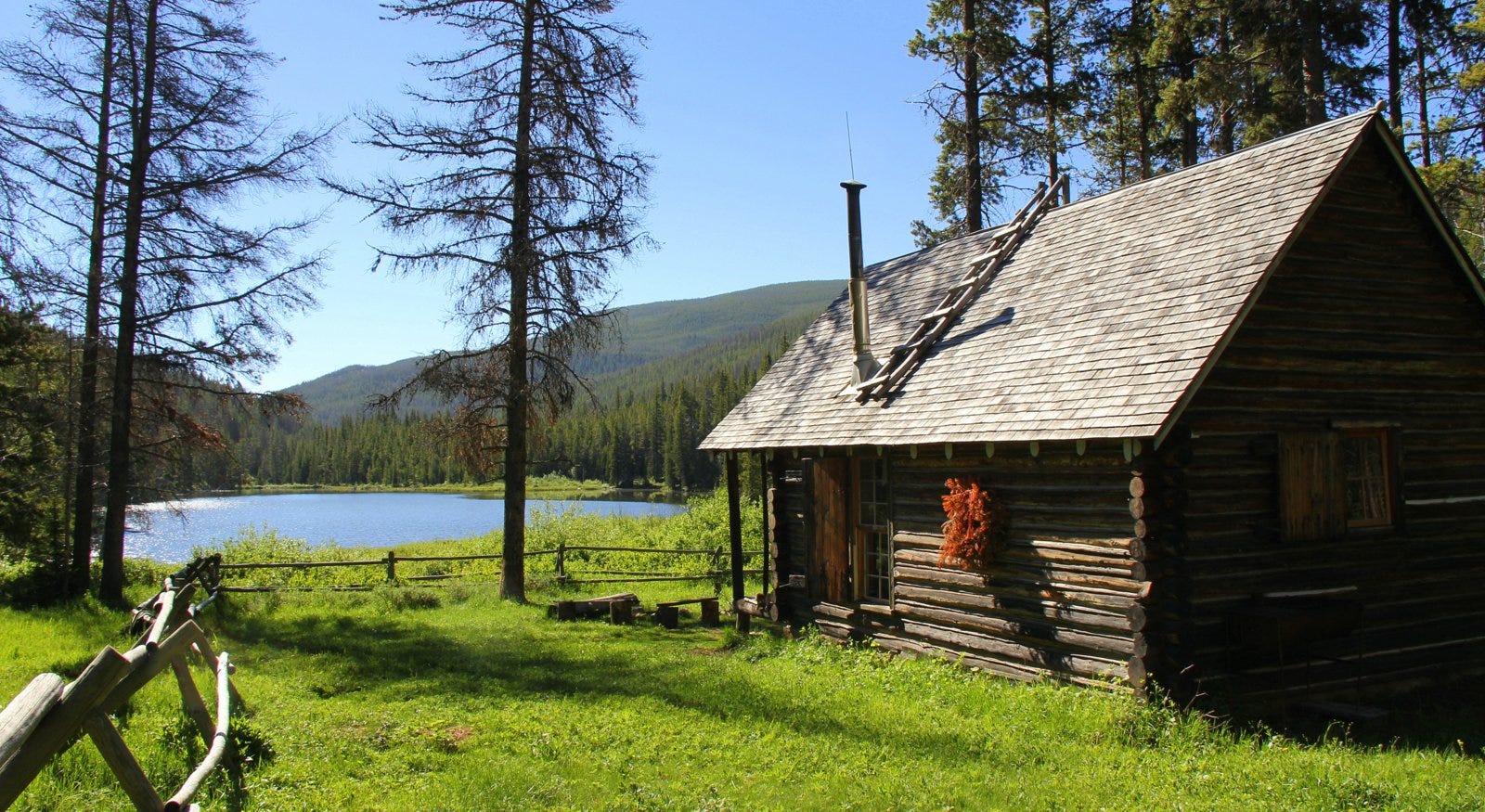
The RSC went silent when Public Domain pressed for clarity on the numbers and how the effort would potentially impact ranger stations and other structures spread out across federal public lands. Old fire lookouts and wilderness ranger stations, for example, are rarely used by federal workers, but are frequently visited by hikers, campers and other public land users. Would the land they sit on potentially be sold with the structures and lead to private inholdings on cherished public lands?
Notably, the 2007 OMB report that the RSC appears to have based its revenue target on specifically highlighted several such structures on Forest Service land as being surplus and eligible for potential sale, including ranger dwellings in Deadwood, South Dakota and Lovell, Wyoming. At the time, there were more than 1,800 “excess property assets” at the Interior Department and more than 4,600 at the Department of Agriculture, according to the report.
In 2009, during the Obama administration, federal agencies disposed of more than 19,000 assets, including more than 11,000 buildings and more than 7,000 structures, along with more than 100,000 acres of land, according to the GSA report. The government sold off 2,200 of those assets that year, generating $50.2 million in net proceeds — an average of just $22,818 per structure.
If the federal government was able to sell unused or underused federal buildings today for an average $50,000 apiece — more than double what it brought in in 2009 — they’d have to offload 2.3 million buildings to hit the RSC’s $115 billion revenue target.
As of 2013, the federal government owned or leased approximately 400,000 buildings.
This exposes how carelessly theyre treating public assets that belong to all of us! The fact that they're using outdated data from 2007 to justify selling off public property shows this isnt about fiscal responsibilty but about transfering wealth. Your investigation into the flimsy math behind the $115 billion claim is exactly the kind of accountability journalism we need right now.
Thanks for shedding on this (yet another) example of questionable behavior on the current administration.