


This story was co-published with High Country News.
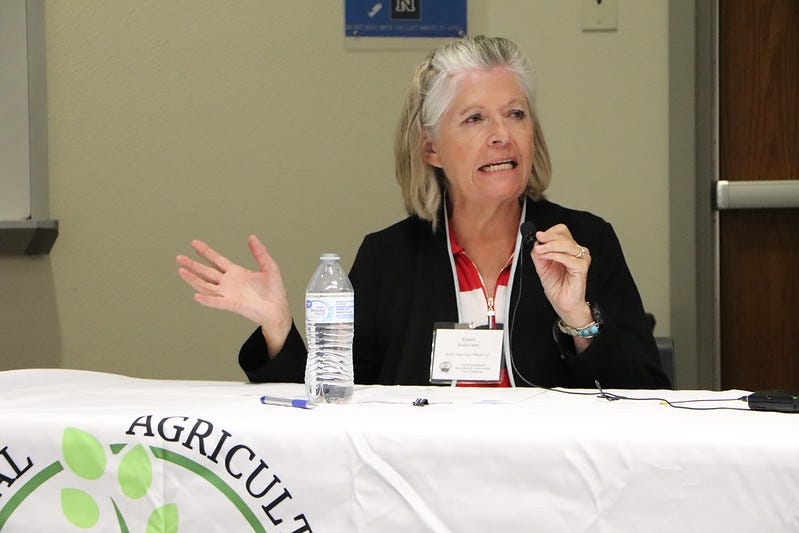
President Donald Trump’s Interior Department is withholding key ethics disclosure information for Karen Budd-Falen, a high-ranking agency appointee who is facing calls for an investigation into her financial ties to a massive lithium mining project, Public Domain has learned.
Interior’s Office of the Solicitor released 91 pages of ethics documents Friday from Budd-Falen’s time in both Trump administrations to the Center for Western Priorities, a Colorado-based conservation group, after initially telling the group it had no such files in its records. But the release redacted crucial information, some of which has been detailed elsewhere, while at the same time raising new questions about Budd-Falen’s personal interest in a major lithium mine project in Nevada.
It is the latest in an unusually chaotic and disjointed release of what are typically the most basic of public disclosures, as Budd-Falen faces growing scrutiny over a lucrative water sale in the arid Southwest. Ethics guidance and recusals are standard for executive branch appointees and outline steps public servants must take to avoid conflicts of interest.
“These documents suggest that [Interior Secretary] Doug Burgum has a massive problem at the Interior ethics office,” said Aaron Weiss, deputy director of the Center for Western Priorities. “If Karen Budd-Falen still hasn’t received updated ethics agreements or waivers, then the ethics office is failing at its job. These documents, even in their highly-redacted forms, show that the [Inspector General] needs to launch an urgent investigation into Karen Budd-Falen and Interior ethics officials.”
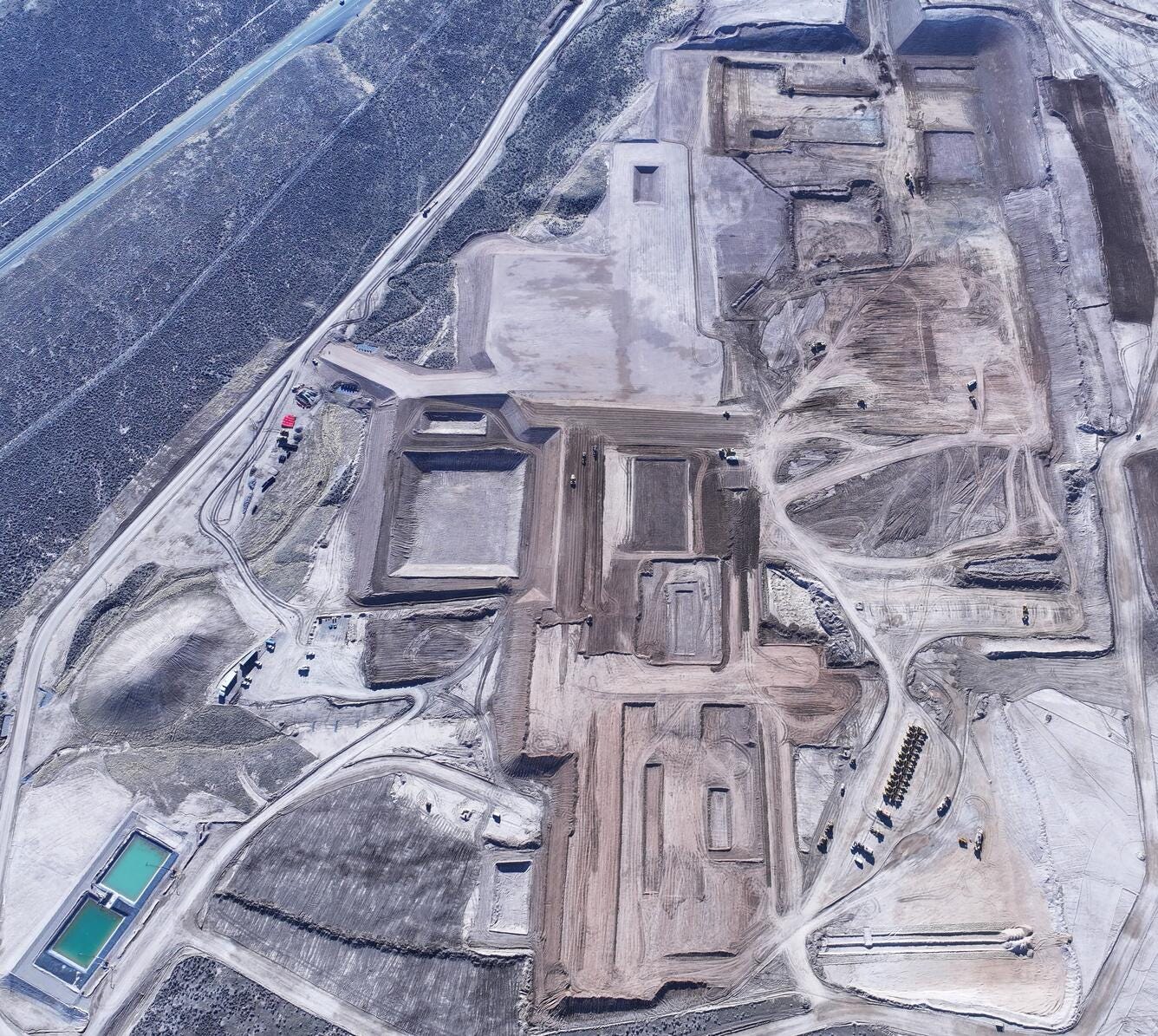
As Public Domain and High Country News first reported in December, Budd-Falen has deep financial ties to a lithium mine project in Nevada that the Trump administration has worked for years to advance. In 2018, shortly after the Wyoming lawyer joined the first Trump administration as a top legal official at Interior, her husband struck a deal to sell water rights from Home Ranch, LLC, one of the family’s ranching operations, to Lithium Nevada Corp., the developer of the controversial Thacker Pass mine.
Budd-Falen never publicly disclosed that water sale in her annual financial disclosure forms, according to Public Domain’s review of the documents.
The Interior Department has repeatedly dismissed Budd-Falen’s financial entanglement with Lithium Nevada as “baseless accusations,” without elaborating. The agency did not respond to Public Domain’s specific questions Monday about the new batch of ethics documents, except to say that so-called PAS employees, those appointed by the president and confirmed by the Senate, have ethics agreements.
“Non-PAS appointees get guidance and recusal memos which have been supplied,” agency spokesperson Katie Martin wrote. “This has been a constant from one administration to the next.” However, the documents released on Friday did not include updated recusal memos or guidance. Martin did not respond to questions about whether those documents have been updated since 2018 or whether the old ones were still binding.
The documents released last week show that on Nov. 5, 2018, Interior’s ethics director granted Budd-Falen a partial waiver to retain her financial interests in Home Ranch and other ranching operations.
That same day, Budd-Falen signed a written statement acknowledging that the waiver “does not authorize me to participate in either particular matters involving, or in matters that to my knowledge have a direct and predictable effect on the financial interests involving” Home Ranch and several other family ranching outfits. And in a separate ethics recusal, also dated Nov. 5 2018, she noted that her husband, Frank Falen, “does not actively manage Home Ranch, LLC.”
Less than a month later, Home Ranch, LLC struck a deal to sell water to Lithium Nevada. The Securities and Exchange Commission filing detailing the agreement was signed by Frank Falen, who is listed in the document as the ranch manager. Approximately a year into her tenure in the first Trump administration, Budd-Falen met with Lithium Nevada executives, according to her official agency calendar.
Weiss called the situation “stunning.”
“She had an obligation to disclose it,” he said of the water deal. “It appears she did not disclose it. And therefore everything else here is tainted. The lack of disclosure to begin with should invalidate the rest of the ethics agreements, because without accurate information about her conflicts, ethics officials have no way to give her good advice.”
Following Public Domain and High Country News’s investigation into Budd-Falen’s financial ties to the mine, The New York Times revealed that Lithium Nevada paid $3.5 million for the ranch’s water rights — a deal that was contingent on federal regulators approving the mine project. In the final weeks of Trump’s first term in office, the Bureau of Land Management approved the project, which includes some 5,700 acres of public land that Budd-Falen was charged with helping oversee.
Craig Holman, a government affairs lobbyist for the progressive watchdog group Public Citizen, told Public Domain that Budd-Falen may have run afoul of ethics laws, including the Ethics in Government Act of 1978, under which executive branch employees can face civil and criminal penalties for falsifying or failing to report required information in a financial disclosure.
Those who intentionally mislead agency ethics officials can be held personally liable for any violations, Holman said.
For weeks, Public Domain and other journalists and watchdog organizations have been asking the Interior Department to turn over Budd-Falen’s ethics agreement and any waivers she received since rejoining the Trump administration. The Interior Department has not yet released the documents directly to Public Domain.
On Thursday, after a lengthy delay, Interior’s Solicitor’s Office told a researcher working for the Center for Western Priorities that it was unable to locate any ethics agreements for Budd-Falen, either from her current tenure or her stint in the first Trump administration.
“After a thorough search of our files, the Office of the Solicitor did not locate records responsive to your request,” a FOIA officer in the Solicitor’s Office wrote in response to two separate requests seeking ethics recusals from her time in both Trump administrations. The Center for Western Priorities shared the communications exclusively with Public Domain.
When Public Domain reached out to the Interior’s press office Thursday about Budd-Falen seemingly never filing such paperwork, Martin said our outlet had been given incorrect information.
“Karen has of course filed the proper paperwork for this admin and the previous admin,” Martin wrote in an email. “I believe you are aware that career ethics officers ensure we all comply with the rules. We are getting to the bottom of why a Dept employee gave you false information. Hoping it was laziness and not sheer incompetence.”
Asked Friday to provide the documents, Martin said the press office could not provide them. Instead, the agency’s FOIA officers would have to fulfill the request. Hours later, the Center for Western Priorities received dozens of pages from the agency. A FOIA officer told the group’s researcher that his earlier letters stating that there were no responsive records “were erroneous and, upon further review, we have located records that are responsive to both requests.”
Interior’s ethics office similarly failed to initially include Budd-Falen’s financial disclosure in response to a Public Domain records request last year, calling it an “inadvertent oversight.”
The documents that the Center for Western Priorities obtained Friday and shared with Public Domain do not include an updated ethics recusal for Budd-Falen’s current tenure, but instead boilerplate guidance material she was sent early in her tenure and a “draft,” blacked out list of her former clients — even though her financial disclosure lists a dozen legal clients she represented in the year before rejoining government. It also redacted every single entity listed on Budd-Falen’s recusal list from the first Trump administration.
The agency told CWP that the withheld information “consists of personal fiduciary information, and we have determined that the individuals to whom this information pertains have a substantial privacy interest in withholding it.”
“Because the harm to personal privacy is greater than whatever public interest may be served by disclosure, release of the information would constitute a clearly unwarranted invasion of the privacy of these individuals,” it wrote.
Citing reporting by Public Domain and The New York Times, Democrats on the House Natural Resources Committee sent a letter last month demanding Interior’s acting Inspector General launch an ethics probe into Budd-Falen.
During the first Trump administration, David Bernhardt, who served as Interior deputy secretary and later as secretary, repeatedly touted his efforts to fix Interior’s ethics program.
“The rotten stench from the blatant failure of the prior administration to invest in the ethics program has been replaced with a culture of ethical compliance,” he declared in an August 2020 statement. “Our employees are now seeking and receiving ethics guidance.”
By then, the Budd-Falen family ranch was already receiving payments from Lithium Nevada.
Disgusting! Gross Conflict of Interest!
So, of course, her first name is “Karen.” A criminal named Karen sounds so mundane.