


In August 2022, Karen Budd-Falen, a private attorney at the time who now serves as the third highest-ranking official at the Interior Department, sent a 53-page appeal challenging a Bureau of Land Management decision to allow a conservation nonprofit to continue grazing bison on public land in central Montana while expanding its access to new areas.
The nonprofit, American Prairie Reserve, seeks to restore bison to many thousands of acres of private and public lands in the state. A July 2022 decision by the BLM authorizing it to maintain its herds on numerous parcels of federal land furthered that effort. The prairie reserve however, has drawn fierce opposition from ranching groups in the state, who see its bison restoration mission as a threat to their livestock and way of life.
Budd-Falen, a self-proclaimed “cowboy lawyer,” filed the appeal on behalf of three pro-ranching entities: the Montana Stockgrowers Association and the North and South Phillips County Cooperative State Grazing Districts. In it, she argued that the BLM’s authorization of bison grazing on the Montana allotments had violated multiple laws and regulations, including the Taylor Grazing Act of 1934, and caused “significant harm” to her clients.
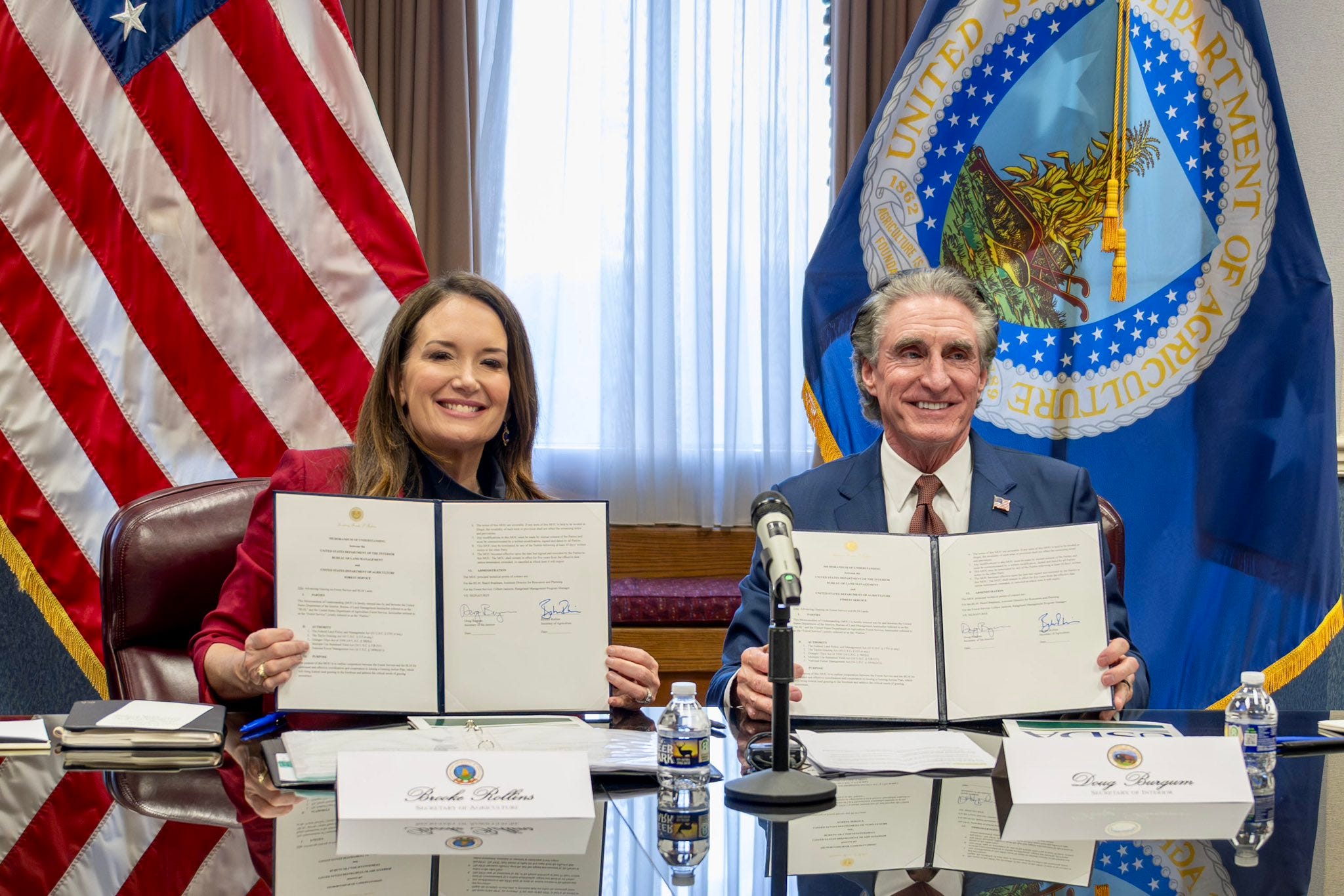
The appeal was filed with the Office of Hearings and Appeals (OHA) — an administrative law body within the Interior Department that normally has the power to issue its own rulings. But in a rare move, Interior Secretary Doug Burgum personally intervened, overriding OHA’s authority over the case.
On December 9 last year, Burgum assumed jurisdiction over three separate appeals challenging American Prairie Reserve’s federal grazing permits, including the appeal Budd-Falen filed. Shortly thereafter, Burgum directed the BLM to reconsider its decision and “take into account the arguments raised” by Budd-Falen’s former clients and other appellates. By then, Budd-Falen had been serving as one of Burgum’s top deputies for approximately nine months.
At the Office of Hearings and Appeals, the administrative law judge whose authority Burgum was overriding emailed a colleague on Dec. 10, 2025 to flag the “high-profile” nature of the bison grazing cases. The judge explicitly highlighted the involvement of Budd-Falen’s long-time law firm in the administrative battle.
“I wanted to alert you to the fact that Falen Law firm (formerly the Budd-Falen law firm) represents one of the parties to the administrative proceeding,” Dawn Perry, an administrative law judge at Interior’s Office of Hearings and Appeals wrote to Amy Sosin, then the acting director of the appeals office. (Budd-Falen divested her interest in her namesake law firm in March 2025. Her husband, Frank Falen, remains at the firm.)
The judge’s email and other case documents were obtained by the Southern Utah Wilderness Alliance and exclusively shared with Public Domain.
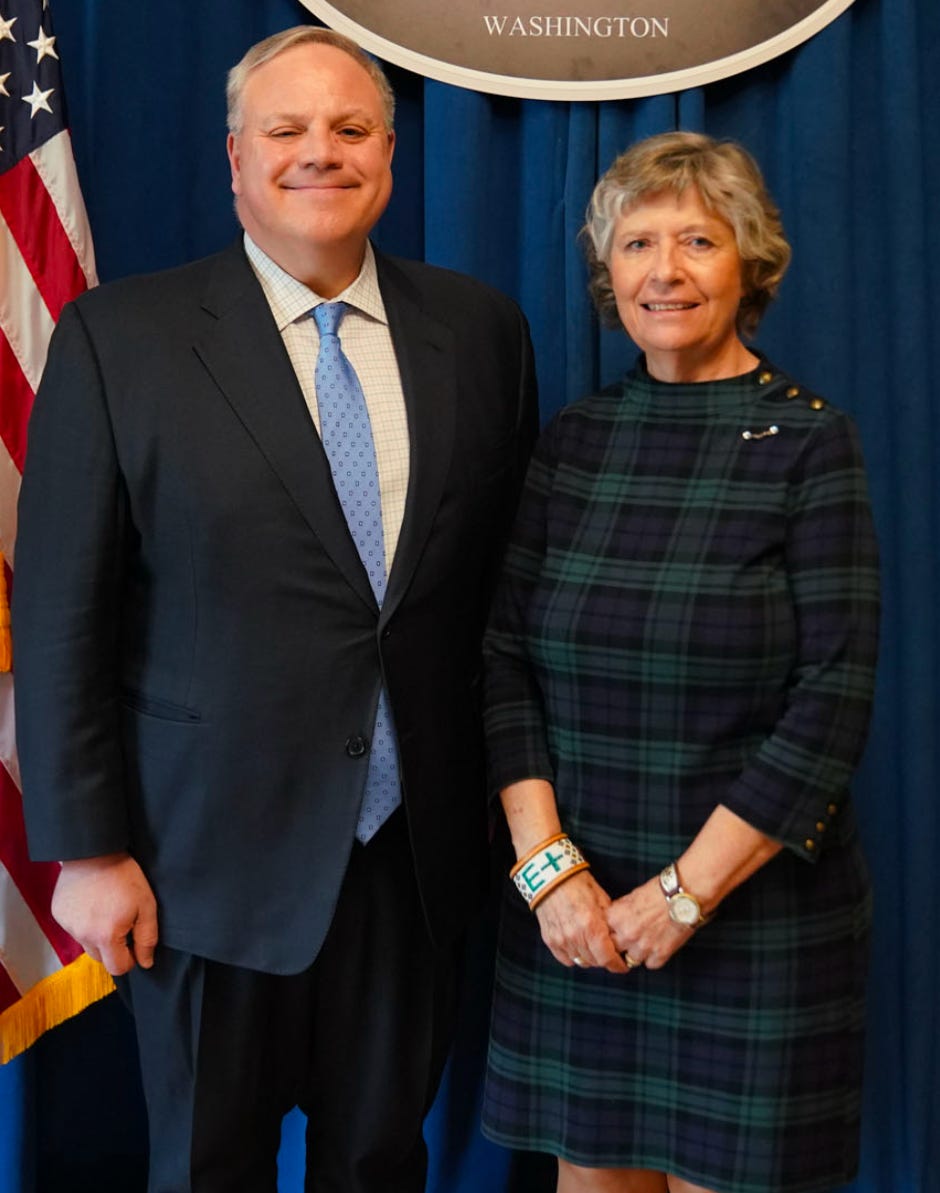
Last week, the BLM — an agency that Budd-Falen helps oversee as Interior’s associate deputy secretary — finalized its decision to revoke American Prairie’s permits to graze bison on at least six different federal allotments, fulfilling the very request that Budd-Falen and others made of the agency back in 2022. Among the grazing allotments affected is the Flat Creek allotment in Montana. In her most recent financial disclosure, Budd-Falen lists the “Flat Creek Allotment” in Malta, Montana, as one of her former legal clients.
The Montana Stockgrowers Association did not respond to Public Domain’s request for comment Thursday. In a press release last week, the association applauded BLM’s reversal and touted its 2022 appeal
“Since the initial 2022 decision, MSGA has consistently argued that BLM failed to properly apply the law and overstepped its statutory authority by allowing bison grazing outside the production livestock framework required under the [Taylor Grazing Act],” the organization wrote. “This final decision validates those concerns and marks a significant precedent for public lands grazing policy across the West.”
The Interior Department, in a statement, said that “Karen Budd-Falen has followed all ethical guidelines and recused herself from all matters involving her former clients.”
“Karen Budd-Falen is a highly qualified, principled public servant who brings the utmost expertise to her role at the Department,” the statement continued. “Frankly, your attempt to smear a successful woman who is passionate about her work and dedicated to improving life for the American people is an insult to every hardworking woman across this country.”
At the time of this story’s publication, the Falen law firm had not responded to Public Domain’s queries.
The American Prairie case isn’t the only time Burgum has intervened in an appeal that involved Budd-Falen’s clients. In February 2025, the month before Budd-Falen joined Interior, Burgum assumed jurisdiction over a large number of OHA appeals related to grazing permits in Idaho. One of the appellants involved was a grazing association represented by Budd-Falen herself. She withdrew from the case the same month she joined DOI.
Burgum’s intervention in the Idaho cases in February 2025 also involved Josephine Creek Ranch, which is tied to Mike Boren, a multimillionaire conservative donor. Boren’s name is listed in one of the cases that Burgum took control over. Boren currently serves as the Under Secretary of Agriculture for Natural Resources and Environment at the Department of Agriculture. Last year, he also served a stint at President Trump’s Interior Department.
A Department of Agriculture spokesperson, in a statement, said that Boren has never “conversed with” Burgum about the case and follows his ethics guidance. “Mr. Boren is a minority shareholder of Josephine Creek Ranch, Inc., and gave up any management of the ranch before he entered the administration,” the spokesperson said, adding that “to the best of Mr. Boren’s knowledge, this settlement of the lawsuit has had no impact on the practices of Josephine Creek Ranch, which has always been managed with conservation in mind, although it is likely to be detrimental to the income of several environmental activist attorneys.”
Doug Burgum’s apparent pattern of delivering policy changes that involve or benefit Budd-Falen’s former clients has raised concerns among conservation groups.
“Public lands should be managed for the long-term benefit of all Americans, not for the short-term personal gain of Karen Budd-Falen or her clients,” said Landon Newell, staff attorney at the Southern Utah Wilderness Alliance (SUWA). “Recent news coverage,” he added, “makes clear that an investigation into her actions at DOI is warranted.”
Since joining the Interior Department last year, Budd-Falen has become embroiled in major ethics scandals. As Public Domain has extensively reported, Budd-Falen is facing calls for investigations over potential conflicts of interests stemming from her personal financial ties to the controversial Thacker Pass lithium mine. She is also facing scrutiny over her work on grazing policies — an issue she was barred from even discussing during the first Trump administration. Her influence on grazing has the potential to benefit her family’s sprawling ranching operations. In March, amid questions from this outlet over her involvement in several grazing policies, the Interior Department’s ethics office granted Budd-Falen a partial waiver that gave her wide latitude to work on grazing, despite her large ranch holdings.
This story was supported by a grant from the Fund for Investigative Journalism.
Thanks for exposing the bald-faced corruption at DOI. If you'd like to know about how those conflicts are driving federally-protected wild horses into the slaughter pipeline in violation of federal law, please see my Substack: https://substack.com/@suzanneroy/note/p-197537362?r=1xxov8&utm_source=notes-share-action&utm_medium=web